
In today’s hyper-connected world, the question is no longer if you need website for your business — it is how soon you can get one live. Whether you are running a local shop in Chattogram, a growing service agency in Dhaka, or an e-commerce brand targeting global buyers, one thing remains constant: your customers are searching for you online right now. If they cannot find a professional website, they will move on to your competitor without a second thought.

Consider this — over 89% of consumers research a business online before making any purchase decision. That means the majority of your potential customers are actively looking for information about your products and services before they ever pick up a phone or walk through your door. Without a strong online presence for business, you are simply invisible to them.
When you need website for your business, you are not just buying some web pages — you are investing in your brand’s credibility, visibility, and long-term revenue growth. A professional website works for you 24 hours a day, 7 days a week, reaching audiences you could never connect with through traditional marketing alone. At Ezuvex, we have helped businesses across industries understand why a website is the single most important digital asset they can own — and how to use it to grow consistently.
In this in-depth guide, we will walk you through seven powerful reasons why every business must have a professional website in 2026, along with practical steps for building one that actually delivers results. By the end, you will understand not only the importance of having a website but also exactly what it takes to make that website perform for your brand.
[toc]
What Does It Really Mean to Need Website for Your Business?
When business owners say they need website for your business, many imagine something simple — a few pages with their contact information and a list of services. But in reality, a modern business website is far more than that. It is your digital headquarters. It is the central hub where every piece of your online marketing activity eventually leads — your Google Ads, your social media posts, your email campaigns, your SEO content — all roads lead back to your website.
A small business website is your 24/7 salesperson, your customer service portal, your product catalog, and your brand storytelling platform all rolled into one. It is the place where a curious visitor becomes a trusting customer, and where a one-time buyer becomes a loyal advocate for your brand.
Unlike a social media profile — which is built on someone else’s platform and subject to algorithm changes, policy updates, and account shutdowns — your website is fully owned by you. No one can take it away, suppress your reach, or change the rules on you overnight. It is the only piece of digital real estate you truly own on the internet.
Research from Network Solutions confirms that 89% of consumers research a business online, and 80% of those searches lead to conversions. That conversion does not happen on social media — it happens on your website, where you have full control of the experience, the messaging, and the call-to-action. This is why partnering with an expert team like Ezuvex to build and optimize your website is one of the smartest investments you can make for your brand.
6 Powerful Reasons You Need Website for Your Business
1. Build Unshakeable Credibility and Website for Brand Credibility
The first and most fundamental reason you need website for your business is credibility. In 2026, if a potential customer searches for your brand and finds nothing — no website, no professional online presence — they will almost certainly move on. The harsh truth is that businesses without websites are perceived as unprofessional, unreliable, or even nonexistent in the minds of modern consumers.
Your website for brand credibility is where you prove that you are the real deal. It is where you display your portfolio, your client testimonials, your certifications, your team, and your brand story. These elements combine to create a powerful trust signal that tells every visitor: “We are serious, experienced, and trustworthy.”
According to consumer behavior research, users form a first impression of a website within just 0.05 seconds of landing on it. That snap judgment — based entirely on your design, loading speed, and professionalism — determines whether they stay and explore or hit the back button immediately. A clean, modern, and well-structured website immediately signals competence and authority.
For any business competing in today’s crowded digital marketplace, credibility is everything. And no tool builds credibility faster or more effectively than a well-designed, professionally maintained website. Add an SSL certificate for security, integrate Google Reviews, and display notable client logos — these small additions stack up into a powerful perception of reliability.
2. Expand Your Reach Through Online Presence for Business
Traditional marketing — flyers, billboards, print ads, word of mouth — is geographically limited. Your reach extends only as far as people can physically see or hear your message. But when you build a strong online presence for business, all geographical barriers disappear instantly.
With a properly optimized website, your business becomes discoverable to anyone in the world searching for what you offer. A manufacturer in Chittagong can attract buyers from Dubai. A consultant in Dhaka can serve clients in London. A restaurant in Sylhet can attract food tourists from across Bangladesh. This kind of global reach, once reserved only for large corporations with massive marketing budgets, is now accessible to any business that invests in a professional website.
Your website also eliminates time constraints. Unlike a physical store with operating hours, your website is always open. A visitor can browse your services at 2 AM, read your blog, compare your pricing, and submit an inquiry — all without you needing to be available. By the time you wake up the next morning, there could be a fresh batch of qualified leads waiting in your inbox.
This always-on availability is one of the most underappreciated business website benefits that business owners discover after launching their first website. The compounding effect over months and years — as more content gets indexed and more keywords rank — makes your website an increasingly powerful lead-generation engine that grows in value without growing in cost.
3. Showcase Your Products and Services With Maximum Impact
Social media gives you a tiny window to show what you do. Character limits, image size restrictions, algorithmic suppression, and fleeting post lifespans all work against you. Your website, on the other hand, gives you unlimited real estate to showcase everything your business offers in exactly the way you want.
Create dedicated landing pages for each service you offer. Build a complete product catalog with high-resolution images, detailed descriptions, pricing, and FAQs for every item. Embed video demonstrations, before-and-after case studies, and downloadable brochures. The depth and richness of information you can provide on your website cannot be matched by any social media platform.
This detailed presentation serves a critical business function: it pre-qualifies your prospects. When a visitor spends ten minutes reading through your service pages and case studies before contacting you, they have already made 70% of the buying decision in their mind. They are not cold leads — they are warm, informed prospects who are ready to take the next step. This dramatically improves your conversion rates and shortens your sales cycle.
For a small business website, this ability to educate and persuade visitors before the first conversation is a game-changer. You spend less time explaining basics and more time closing deals with clients who already understand your value.
4. Generate Leads Around the Clock — A Core Business Website Benefits
Perhaps the most tangible of all business website benefits is automated lead generation. A well-optimized website does not just display information — it actively captures leads for you while you focus on running your business.
Every page on your website is a lead-generation opportunity. A strategically placed contact form invites visitors to reach out. A compelling “Get a Free Quote” button nudges fence-sitters toward action. A pop-up offering a free resource in exchange for an email address builds your subscriber list. An integrated WhatsApp chat button connects mobile visitors to you instantly.
The power of this system lies in its passivity. Once built and optimized, your website generates leads continuously — without any additional time or financial investment from you. This is fundamentally different from running paid ads, which stop the moment you stop spending, or social media posting, which requires constant manual effort to maintain visibility.
Moreover, your website collects priceless data about your visitors’ behavior through tools like Google Analytics. You can see exactly which pages people visit most, how long they stay, where they drop off, and what source brought them to you. This data allows you to continuously refine your content, improve your conversion rates, and make smarter marketing decisions — all based on real evidence rather than guesswork.
5. Compete Effectively With Larger Businesses in Your Industry
One of the most empowering aspects of having a professional website is that it completely levels the competitive playing field. A well-designed, SEO-optimized website from a five-person business can outrank and outperform the website of a large corporation if the smaller business invests more wisely in its digital strategy.
When a customer conducts a Google search, they see a list of results — and the ranking position has nothing to do with company size, headcount, or marketing budget. What matters is the relevance, authority, and quality of your website’s content. A small business that consistently publishes valuable content, earns quality backlinks, and optimizes its pages for the right keywords can absolutely dominate search results in its niche — even against much larger competitors.
This is especially true for local searches. When you optimize your small business website for local SEO — setting up your Google Business Profile, using location-specific keywords, building local citations — you can appear at the very top of search results for people in your area looking for exactly what you offer. Local SEO gives small businesses a powerful advantage over larger brands that are less focused on hyperlocal targeting.
When you understand why you need website for your business from this competitive perspective, the investment becomes obvious. Your website is not just a marketing tool — it is your most powerful competitive weapon in the fight for customers’ attention.
6. Power Every Aspect of Your Digital Marketing for Business
Every effective digital marketing for business strategy has one thing in common: it depends on a website. Think about the major digital marketing channels available today — Google Ads, Facebook Ads, Instagram marketing, email campaigns, YouTube videos, content marketing, SEO — and ask yourself: where do all of these activities send your potential customers? The answer, in every single case, is your website.
Your website is where the conversion happens. Social media creates awareness; email marketing nurtures interest; paid ads drive traffic — but your website is where a visitor transforms into a paying customer. Running any form of digital marketing without a website is like spending money on a map that leads to an empty plot of land.
A website also unlocks powerful marketing tools that are impossible to use without one. Google Remarketing allows you to show targeted ads to people who have previously visited your website, keeping your brand top-of-mind until they are ready to buy. Facebook Pixel lets you build custom audiences based on your website visitors and serve them highly relevant ads across the Meta platform. These retargeting capabilities alone can dramatically increase your return on advertising spend.
Furthermore, your website enables conversion tracking. You can set up goals in Google Analytics to track exactly how many visitors took specific actions — filled out a form, made a purchase, booked a call — and trace those conversions back to their original traffic source. This level of accountability makes your entire digital marketing for business operation smarter, more efficient, and more profitable.
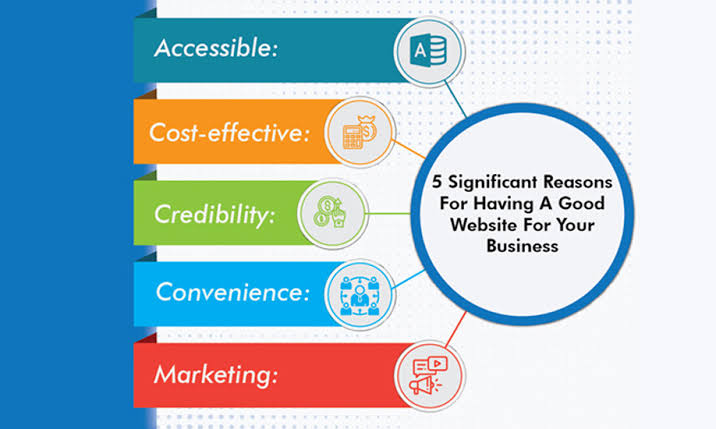
How to Build a Small Business Website That Actually Performs
Understanding why you need website for your business is step one. Building it correctly is step two. Here is a practical roadmap for getting your website live and performing from day one.
Step 1 — Choose a Brandable Domain Name
Your domain name is your digital address — it needs to be simple, memorable, and directly tied to your brand identity. Short is better. Avoid hyphens, numbers, or unusual spellings that confuse people. If possible, secure the .com extension, as it remains the most widely recognized and trusted by users globally.
For Bangladeshi businesses targeting local audiences, a .com.bd domain can also add a layer of local credibility. Whatever you choose, make sure your domain name is something a customer could remember after hearing it once and type correctly without any hints.
Step 2 — Invest in Quality Hosting
Your hosting provider determines the speed, uptime, and reliability of your website. Poor hosting means slow loading times, frequent downtime, and frustrated visitors who leave and never return. Google also uses page speed as a direct ranking factor — slow websites rank lower in search results.
For WordPress websites (which power over 43% of all websites on the internet), choose a hosting plan specifically optimized for WordPress performance. Look for features like SSD storage, CDN integration, and a 99.9% uptime guarantee. Quality hosting is the infrastructure your entire online presence for business is built upon — cutting corners here is never a good idea.
Step 3 — Design for User Experience and Conversions
Great website design is not about flashy animations or trendy color palettes — it is about making it effortlessly easy for your visitors to find what they need and take action. Every page should have a clear hierarchy, a prominent call-to-action, and logical navigation that guides users deeper into your site.
Mobile responsiveness is not optional. Over 60% of global web traffic now comes from smartphones — if your website is not optimized for mobile, you are losing the majority of your potential visitors before they even read your first sentence.
When you need website for your business to truly perform — generating leads, building credibility, and driving revenue — working with a professional team removes the guesswork and accelerates your results dramatically. The expert team at Ezuvex specializes in building WordPress websites that are fast, beautiful, and built to convert.
Website for Brand Credibility — Why First Impressions Are Everything
We live in a world of instant judgments. When a potential customer lands on your website for the first time, they form a subconscious opinion within milliseconds. Your website for brand credibility is your single most important tool for winning that critical first impression — and converting a skeptical visitor into a confident buyer.
A credible website communicates trustworthiness through multiple layers. The first is visual professionalism — clean design, consistent branding, high-quality imagery, and readable typography all signal that your business takes itself seriously. A cluttered, outdated, or poorly designed website immediately raises doubts about the quality of your products and services.
The second layer is social proof. Customer testimonials, before-and-after case studies, star ratings, press mentions, and client logos all serve as powerful evidence that others have trusted and benefited from working with you. People are far more comfortable making purchase decisions when they see that others have had positive experiences — this is the psychology of social proof working in your favor.
The third layer is security and transparency. Your website should include an SSL certificate (HTTPS), a clear privacy policy, and easily accessible contact information. Hidden contact details, lack of security certificates, and vague business information are instant red flags for modern consumers who are highly sensitive to online scams.
Finally, fresh and updated content builds credibility over time. A blog that was last updated two years ago tells visitors your business might not be active. Regularly publishing new content demonstrates that your brand is alive, growing, and invested in providing value to its audience.
Business Website Benefits You Cannot Afford to Ignore
The full list of business website benefits is extensive, but here are the ones that directly impact your revenue and brand growth:
Permanent Digital Asset: Unlike a social media post that disappears from feeds within hours, a well-written blog article or service page can generate traffic for years. Your website is a permanently compounding asset that grows in value the longer it exists.
Customer Education at Scale: Your website can educate thousands of potential customers simultaneously — answering their questions, addressing their objections, and guiding them toward a buying decision — all without any manual effort from your team.
Analytics and Decision Intelligence: The data your website collects through tools like Google Analytics and Google Search Console provides business intelligence that is impossible to gather elsewhere. Understanding your customers’ behavior online allows you to make smarter decisions across every aspect of your business.
E-commerce and Payment Processing: A website enables you to sell products and services directly online, accept payments from anywhere in the world, and operate a revenue stream that functions completely independently of your physical location or business hours.
Brand Control: Unlike social media platforms where your posts compete with thousands of others for attention, your website is a distraction-free environment where your brand has the visitor’s complete focus. You control every word, every image, and every call-to-action — making it the most powerful brand communication tool available.
When you add up all these business website benefits, the return on investment becomes undeniable. Every month your business operates without a website is a month of missed leads, lost credibility, and surrendered competitive ground.
Common Mistakes to Avoid When You Need Website for Your Business
Building a website is one thing — building a website that works is another. Here are the most critical mistakes businesses make that undermine their online investment:
No Mobile Optimization: A website that looks broken on smartphones is not just annoying — it is a conversion killer. With the majority of searches now happening on mobile devices, a non-responsive website actively drives potential customers away the moment they land on your page.
Missing Calls-to-Action: Many business owners build beautiful websites and then forget the most important element — telling visitors what to do next. Every page needs at least one clear, compelling call-to-action that guides visitors toward the next step in their journey with your brand.
Neglecting Page Speed: Google uses loading speed as a direct ranking factor, and users abandon pages that take more than three seconds to load. Optimize your images, choose fast hosting, and minimize unnecessary code to keep your website lightning fast.
Ignoring SEO from Day One: Building a website without SEO optimization is like opening a store with no signage on an empty street. From the very beginning, every page needs proper keyword targeting, meta descriptions, heading structure, and internal linking to have any chance of being discovered organically.
Outdated and Neglected Content: A website with old news articles, broken links, and outdated pricing signals to visitors — and to Google — that your business is inactive. Commit to regular content updates, blog publishing, and technical maintenance to keep your site healthy and trustworthy.
Understanding why you need website for your business also means understanding what makes a website truly effective. Avoiding these common pitfalls from the start saves you months of frustration and ensures your website investment delivers the results you expect.
Frequently Asked Questions About Need Website for Your Business
Q: Why do I need website for your business if I already have social media profiles?
A: Social media is a valuable tool for visibility, but you do not own your social media presence — the platform does. If Facebook changes its algorithm, restricts your reach, or shuts down your account, you lose your audience instantly. When you need website for your business, you own that digital asset permanently. Your website is your home base on the internet — no platform change, policy update, or account restriction can take it away from you. Social media and your website work best together, with social media driving traffic and your website converting that traffic into customers.
Q: How much does building a small business website typically cost?
A: The cost of a small business website varies significantly depending on your requirements. A basic informational website built on WordPress can cost anywhere from $200 to $1,000 when using pre-built themes. A custom-designed, SEO-optimized, and fully functional business website with e-commerce or booking capabilities typically ranges from $1,500 to $5,000 or more. The investment is well justified when you consider the continuous stream of leads and revenue a properly built website generates over its lifetime.
Q: How quickly can a website improve website for brand credibility?
A: Your website for brand credibility starts working from the moment it goes live. However, credibility builds progressively as you add more content, collect more testimonials, improve your Google ranking, and earn more backlinks. In the short term — within the first few weeks — a professional website immediately signals trustworthiness to anyone who visits. Over the medium term — three to six months — as your SEO gains traction and your content library grows, the perception of authority and expertise compounds significantly.
Q: What essential pages should every business website include?
A: At minimum, your website needs a Home page that clearly communicates your value proposition, an About page that tells your brand story, a Services or Products page with detailed descriptions, a Contact page with multiple contact options, and a Blog for content marketing. These five pages form the foundation of your online presence for business and give visitors everything they need to understand who you are, trust what you offer, and take the next step toward becoming a customer.
Q: How does a website support digital marketing for business?
A: A website is the absolute foundation of all effective digital marketing for business. Every marketing channel — Google Ads, Facebook Ads, email campaigns, YouTube, SEO, influencer marketing — ultimately sends traffic to your website. Without a website, you have nowhere to convert that traffic into customers. Your website also enables advanced marketing tools like Google Remarketing, Facebook Pixel, conversion tracking, and A/B testing — none of which are available to businesses without a website. Invest in your website first, and every other marketing strategy you run becomes exponentially more effective.