
If you have ever wondered how to work Google Ads to grow your business online, you are in exactly the right place. Google Ads is one of the most powerful digital advertising platforms in the world, giving businesses of every size the ability to reach their ideal audience at precisely the right moment — when people are actively searching for what they offer.
Understanding how to work Google Ads is not just a technical skill. It is a business asset that can transform your revenue when executed correctly. Whether you are a small business owner, a freelancer, or a professional in digital marketing, Google Ads can deliver measurable results faster than almost any other paid channel.
In this comprehensive guide by Evens Juel at Ezuvex, we walk you through every essential step — from google ads campaign setup to advanced google ads optimization tips — so you can launch campaigns with confidence. We also cover google ads keyword research, google ads bidding strategy, google ads for beginners fundamentals, and the most common pitfalls to avoid along the way.
By the end of this article, you will have a clear, actionable roadmap to run profitable Google Ads campaigns that drive real clicks, leads, and sales for your business.
[toc]
What Is Google Ads and How to Work Google Ads?
Google Ads (formerly known as Google AdWords) is Google’s online advertising platform that enables businesses to display ads across Google Search, YouTube, Gmail, and millions of partner websites. The platform runs on a pay-per-click (PPC) model — meaning you only pay when someone actually clicks on your ad, making it one of the most cost-efficient advertising systems available.
To truly understand how to work Google Ads, you first need to understand its core principle: it is an auction-based system. Every time a user types a search query into Google, an automated auction takes place in milliseconds. Google evaluates advertiser bids and assigns a Quality Score based on ad relevance, expected click-through rate (CTR), and the quality of the landing page experience. The combination of your bid and Quality Score determines your Ad Rank — which controls whether and where your ad appears on the results page.
According to Hootsuite’s comprehensive Google Ads guide, the platform offers multiple campaign types including Search, Display, Video, Shopping, App, Smart, and Performance Max. Each type serves a different advertising goal, so choosing the right one is among the most critical early decisions you will make.
One of the biggest advantages of learning how to work Google Ads is that you maintain complete control over your budget. There is no minimum spend requirement. You can start with as little as five dollars per day and scale up progressively as you see results. This makes it one of the most accessible advertising tools for businesses at every stage of growth.
Step 1 — Set Up Your Google Ads Account (google ads campaign setup)
The very first step in learning how to work Google Ads is creating and properly configuring your account. Visit ads.google.com and sign in with your Google account. Once inside, Google will immediately push you toward Smart Mode — a simplified, limited setup that strips away most of your control. Instead, click “Switch to Expert Mode” to unlock all campaign settings and professional features from the start.
During your google ads campaign setup, you will configure several foundational elements:
Billing Information — Add your payment method. Google charges you after your ads run, not upfront, so you always know what you are spending before you are billed.
Business Goals — Choose goals such as website traffic, leads, sales, or brand awareness. These selections help Google suggest suitable campaign types for your objectives.
Conversion Tracking — This is arguably the single most important step in the entire setup process. Without conversion tracking, you cannot measure the true performance of your campaigns. Install the Google Ads conversion tag on your website using Google Tag Manager, and clearly define what constitutes a conversion — whether it is a purchase, a contact form submission, a phone call, or a key page visit.
A well-configured account is the backbone of every successful Google Ads campaign. If you skip conversion tracking at this stage, you will spend real money without knowing what is actually producing results. For service businesses like Ezuvex that offer YouTube SEO and digital marketing services, having proper conversion tracking in place means every dollar spent can be traced directly back to genuine leads and inquiries — making this step completely non-negotiable.
Step 2 — Master google ads keyword research
Keyword research is the engine of any Google Ads campaign. A fundamental part of understanding how to work Google Ads is recognizing that the right keywords determine whether the right people ever see your ads at all.
Google Ads keyword research begins with the Google Keyword Planner, a free tool built directly into your Google Ads account. Enter your product or service, and Keyword Planner will generate hundreds of keyword suggestions alongside average monthly search volumes, competition levels, and estimated cost-per-click (CPC) data. This information forms the strategic foundation of your campaign.
When conducting google ads keyword research, focus on three core areas:
Search Intent — Are users looking to buy, to learn, or simply to browse? For sales-driven campaigns, prioritize transactional keywords that signal buying intent — terms containing words like “buy,” “hire,” “get,” “price,” “services,” or “near me.” Informational keywords are better suited for brand awareness or top-of-funnel campaigns.
Keyword Match Types — Google Ads offers four primary match types: Broad Match, Broad Match Modifier (legacy), Phrase Match, and Exact Match. For beginners, starting with Phrase Match and Exact Match gives you much better control over which search queries trigger your ads. Broad Match can drain your budget quickly if not paired with a robust negative keyword list.
Negative Keywords — These are equally as important as your target keywords. Negative keywords prevent your ads from appearing for irrelevant or low-quality searches. For example, if you sell premium YouTube SEO services, adding “free” as a negative keyword helps filter out visitors who are not ready to invest in a paid service.
According to Kinsta’s detailed guide on Google Ads, choosing moderate-volume, highly relevant keywords often delivers better ROI than chasing high-volume broad terms — particularly for small businesses and freelancers in competitive niches like digital marketing. A strong keyword strategy helps you reach your ideal customer, reduce wasted ad spend, and improve your Quality Score — all of which lower your CPC over time.
Step 3 — Create a Winning Campaign Structure (google ads for beginners)
Once you have solid keyword research in place and understand how to work Google Ads at the foundational level, the next step is building a logical, scalable campaign structure. A well-organized account is far easier to manage, optimize, and grow over time.
The standard Google Ads account hierarchy looks like this:
Account → Campaigns → Ad Groups → Ads → Keywords
Each campaign should represent one distinct product line, service category, or geographic target. Inside each campaign, create tightly themed ad groups — each containing 5 to 15 closely related keywords. This approach ensures that your ads closely match what users are actually searching for, which boosts your Quality Score and reduces CPC across the entire account.
For google ads for beginners, a simple but effective campaign structure might look like this:
- Campaign: YouTube SEO Services
- Ad Group 1: YouTube SEO Optimization
- Ad Group 2: YouTube Channel Growth Services
- Ad Group 3: YouTube Keyword Research
Each ad group should contain 3 to 5 ad variations to test simultaneously. Google Ads automatically rotates these variations and over time favors the combinations generating the highest CTR and conversion rate. When naming campaigns and ad groups, use clear and descriptive labels — for example, “Search — YouTube SEO — Bangladesh” immediately communicates the network, service type, and geographic focus, making performance analysis far more efficient.
Step 4 — Write High-Converting Ad Copy
Learning how to work Google Ads also means mastering the art of ad copy — writing text that compels the right people to click and take action. A standard Google Search Ad contains three key components: Headlines, Descriptions, and the Display URL.
Headlines — You can add up to 15 headlines, each with a 30-character limit. Google mixes and matches them to find the top-performing combinations. Always include your primary keyword in at least one headline. Use strong action verbs like “Get,” “Start,” “Hire,” “Boost,” and “Grow” to communicate value and create urgency.
Descriptions — You can write up to 4 descriptions, each 90 characters long. Use descriptions to highlight key benefits, include a clear call to action (CTA), and proactively address common objections. Phrases like “No Contracts,” “Free Audit,” “Results in 30 Days,” and “Money-Back Guarantee” build trust and significantly improve CTR.
Display URL — This is the URL shown inside the ad itself (not necessarily the exact landing page URL). Include a relevant keyword in the path fields — for example, exuvez.riazdadu.com/youtube-seo — to increase perceived relevance and click confidence.
Responsive Search Ads (RSAs) are the default and recommended format in Google Ads today. They give Google the flexibility to test headline and description combinations and serve the most relevant version for each individual search query. To maximize RSA performance, write each headline and description as standalone statements — so every possible combination still makes logical and grammatical sense on its own. Strong ad copy mirrors the exact language your target customer uses when they search, and when your ad speaks their language, your CTR improves — and Google rewards higher CTR with better Ad Rank and lower CPC.
Step 5 — Set Your google ads bidding strategy
Bidding is one of the most important — and most frequently misunderstood — aspects of how to work Google Ads. Your google ads bidding strategy directly determines how much you pay per click and how aggressively Google enters your ads into auctions across the search network.
Google Ads offers both manual and automated bidding options:
Manual CPC — You set the maximum bid for each individual keyword. This provides maximum control but requires consistent daily monitoring and adjustment to stay competitive and cost-efficient.
Enhanced CPC (ECPC) — A semi-automated hybrid where Google automatically adjusts your manual bids upward or downward based on the probability of conversion for each individual auction.
Target CPA (Cost Per Acquisition) — Google automatically sets bids to generate as many conversions as possible at or below your specified target cost per acquisition. Best used after your account has accumulated at least 30 to 50 conversions so the algorithm has enough data to work effectively.
Target ROAS (Return on Ad Spend) — Google bids to maximize revenue while maintaining your target return. This strategy is most powerful for e-commerce businesses with consistent purchase data.
Maximize Clicks / Maximize Conversions — Fully automated strategies that prioritize volume over precision. These are good starting points for beginners who want Google’s machine learning to handle initial optimization.
For anyone at the early stages of learning how to work Google Ads, beginning with Manual CPC or Maximize Clicks is often the wisest choice. This allows you to accumulate real performance data before handing significant control over to Google’s algorithms. Once your campaign has sufficient conversion history, transitioning to Target CPA or Target ROAS can dramatically improve efficiency with far less manual intervention.
Step 6 — Build High-Converting Landing Pages
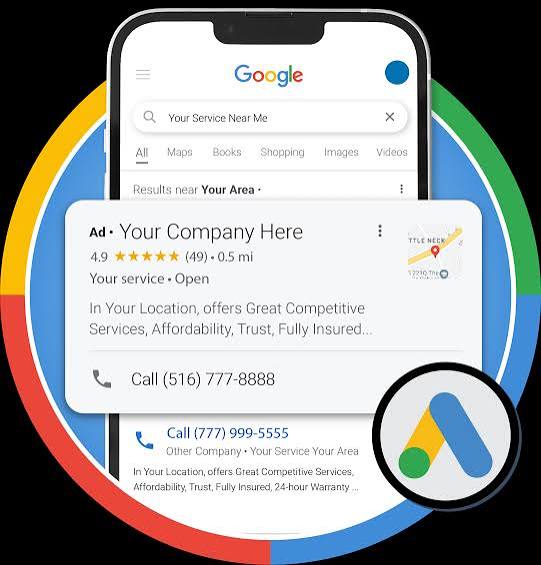
Knowing how to work Google Ads extends well beyond the platform itself. Your landing page plays a massive role in determining whether a click turns into a paying customer — and Google evaluates your landing page as part of the Quality Score calculation.
A poor landing page — one that is slow, irrelevant, or difficult to navigate — will damage your Quality Score, increase your CPC, and lower your Ad Rank. Here is what a genuinely high-converting landing page must include:
Speed — Your page must load in under three seconds on mobile. Use Google PageSpeed Insights to audit and improve your performance score. Research consistently shows that each additional second of load time can reduce conversion rates by up to 20%.
Relevance — The content on your landing page must directly match the keyword and ad that brought the user there. If your ad promises a “YouTube SEO audit,” the landing page should be focused specifically on that audit — not your general homepage or an unrelated service page.
Clear CTA — Every effective landing page has one primary call to action. Whether it is “Get a Free Audit,” “Book a Strategy Call,” or “Start Today,” make your CTA visible above the fold and reinforce it at multiple points down the page.
Trust Signals — Add client testimonials, case study results, recognizable logos, certifications, and service guarantees. These elements reduce user hesitation and meaningfully increase conversion rates.
Mobile Optimization — More than 60% of Google Ads clicks now come from mobile devices. If your landing page is not fully responsive and intuitive on a smartphone screen, you are losing more than half of your potential customers the moment they arrive. For businesses working with Ezuvex on digital marketing strategy, we always recommend a full landing page audit before scaling any ad spend. Explore our full range of services at Ezuvex.
Step 7 — Monitor, Test, and Apply google ads optimization tips
The final — and most ongoing — part of learning how to work Google Ads is continuous optimization. Launching a campaign is just the beginning. The results that actually move the needle come from consistent monitoring, structured testing, and data-driven refinement over time.
Here are the most impactful google ads optimization tips you can apply immediately:
Review Search Term Reports Weekly — The search term report reveals the exact queries that triggered your ads. This is where you find new negative keyword opportunities, discover untapped keyword themes, and understand how real users are actually searching for your service.
A/B Test Your Ads — Never run just one ad variation. Create 3 to 5 different combinations per ad group and let them compete for clicks. After reaching a statistically meaningful sample — typically 100 to 200 clicks per variation — pause the underperformers and scale the winners.
Monitor and Improve Quality Score — A Quality Score of 7 or higher is the target. Scores below 5 mean your ads are being penalized with artificially high CPCs. Fix underperforming scores by improving ad relevance, increasing CTR, and enhancing the landing page experience.
Apply Bid Adjustments by Device, Location, and Time — Use Google’s bid adjustment features to increase spend during periods when conversions are most likely. If your data shows that 80% of conversions happen on desktop between 9 AM and 6 PM, reduce mobile bids and exclude low-performing hours to preserve budget efficiency.
Activate Ad Extensions — Sitelinks, callout extensions, structured snippets, call extensions, and lead form extensions all increase your ad’s real estate on the results page and give users additional ways to engage — all without increasing your cost per click.
Analyze Auction Insights — This report compares your performance to that of competitors appearing in the same auctions. Reviewing impression share, overlap rate, and outranking share helps you make smarter bidding and budget allocation decisions. Consistent application of these google ads optimization tips is what separates campaigns that barely break even from campaigns generating 300 to 500% ROAS. The difference is rarely the budget — it is the level of attention paid to data and the willingness to test, adapt, and improve.
Benefits of Learning How to Work Google Ads for Digital Marketers
For digital marketers and business owners, mastering how to work Google Ads is one of the highest-return skills available in the modern marketing landscape. The platform connects you directly to buyers who are actively searching for solutions — making it fundamentally different from social media advertising, where you interrupt people during passive scrolling sessions.
Here are the core benefits of building this expertise:
Immediate Visibility — Unlike SEO, which takes months to generate rankings, Google Ads can place you at the top of page one within hours of launching your first campaign. For businesses needing rapid results, this speed-to-market advantage is invaluable.
Precise Targeting — You can target by keyword, geographic location, device type, time of day, audience demographics, income level, and even custom remarketing lists built from your own website visitors. This precision ensures your budget reaches only the people most likely to convert.
Measurable ROI — Every click, impression, and conversion is tracked and reported in real time. You always know exactly what your advertising spend is generating, making it straightforward to justify budget increases and optimize relentlessly for profitability.
Scalable Results — Once you identify a profitable campaign, scaling is as simple as increasing your daily budget. Unlike organic content, you do not need to produce more content to generate more results — you just invest more in what is already working.
Competitive Intelligence — Tools like Auction Insights and the Keyword Planner provide valuable visibility into competitor strategies, helping you identify market gaps and positioning opportunities that you can exploit immediately.
For service providers like Ezuvex — specializing in YouTube SEO and digital marketing — mastering how to work Google Ads opens an additional revenue stream and creates access to larger clients who need managed paid traffic alongside organic growth strategies.
Common Mistakes to Avoid When Learning How to Work Google Ads
Most beginners who are working through how to work Google Ads for the first time make the same set of costly, avoidable mistakes. Knowing what to avoid from day one can save you significant budget and dramatically accelerate your learning curve.
Skipping Conversion Tracking Setup — Running paid campaigns without conversion tracking is like navigating without a map. You will have no idea which keywords, ads, or audiences are actually generating business results. This is the single most damaging mistake a new advertiser can make.
Using Broad Match for Everything — Broad match keywords allow your ads to trigger for completely irrelevant search queries, burning through budget without producing qualified leads. Always define negative keywords aggressively and use Phrase Match or Exact Match, particularly in the early months of a campaign.
Sending All Traffic to the Homepage — Your homepage is not a dedicated landing page. Sending all campaign traffic to your homepage almost guarantees low conversion rates. Create specific, campaign-aligned landing pages that directly reflect the ad and keyword that drove the click.
Ignoring Mobile Performance — If your website is not optimized for mobile, a large percentage of your ad clicks will immediately bounce without converting. Test your mobile user experience regularly and resolve any usability issues before scaling your spend.
Running Campaigns Without Regular Review — Google Ads is not a set-it-and-forget-it system. Profitable campaigns require active management: daily budget monitoring, bid adjustments, negative keyword updates, and ongoing A/B testing. Advertisers who check in once a month consistently underperform those who check in weekly.
Optimizing for Low CPC Instead of Profitability — A low cost-per-click means nothing if those clicks never convert into customers. Focus your optimization efforts on Cost Per Conversion and Return on Ad Spend, not the surface-level metric of CPC alone. Avoiding these mistakes from the very beginning puts you far ahead of the average Google Ads beginner and dramatically increases your probability of building campaigns that are consistently and sustainably profitable.
Frequently Asked Questions About How to Work Google Ads
Q: What exactly is how to work Google Ads and why does it matter for my business?
A: Learning how to work Google Ads means developing the ability to create, manage, and optimize paid advertising campaigns on Google’s platform. It matters because Google Ads connects you directly to millions of high-intent users who are actively searching for products and services like yours — making it one of the highest-ROI digital advertising channels available to businesses of any size.
Q: How does google ads campaign setup work for a complete beginner?
A: A proper google ads campaign setup involves signing into Google Ads, selecting Expert Mode, installing conversion tracking, choosing the right campaign type (Search campaigns are best for beginners), defining your target audience and locations, setting a manageable daily budget, and building tightly-themed ad groups with relevant keywords and compelling, benefit-driven ad copy.
Q: Why is google ads keyword research so critical to campaign success?
A: Google ads keyword research determines which user search queries are eligible to trigger your ads. Selecting the wrong keywords means your ads appear in front of the wrong people, wasting budget on clicks that will never convert. Thorough keyword research — focused on user intent, appropriate match types, and a comprehensive negative keyword list — ensures every dollar you spend reaches a genuinely qualified potential customer.
Q: How much does it cost to get started once you understand how to work Google Ads?
A: The platform itself and all its educational resources are free to use. Running live campaigns requires a budget, but Google imposes no minimum spend. Many successful advertisers start with $300 to $500 per month, gather enough data to understand what is working, and then scale confidently from there.
Q: What are the most important google ads optimization tips for someone just starting out?
A: The most impactful google ads optimization tips for beginners are: set up conversion tracking before spending your first dollar, use Phrase Match and Exact Match keyword types, create campaign-specific landing pages rather than sending traffic to your homepage, review your search term report weekly to identify and exclude irrelevant queries, and always run at least three ad variations per ad group so Google has meaningful data to optimize against.