
AI Automation: 7 Powerful Ways to Transform Your Business in 2026
AI automation is no longer a futuristic concept — it is the competitive edge that separates thriving digital businesses from those falling behind. Whether you are a solo entrepreneur or a growing agency, embracing AI automation today means working smarter, scaling faster, and delivering better results to your clients. At Exuvez, we help digital marketers and business owners unlock the full potential of intelligent tools that save time, cut costs, and drive real growth.
In this guide, you will discover exactly how AI automation is reshaping digital marketing, which tools matter most, and the seven most powerful strategies you can deploy right now. From marketing automation and workflow automation to full artificial intelligence tools that handle everything from content creation to lead nurturing, this is your complete roadmap to staying ahead in 2026.
[toc]
What Is AI Automation and Why Does It Matter for Digital Marketers?
AI automation refers to the use of artificial intelligence technologies to perform repetitive, data-driven tasks with minimal human intervention. Unlike traditional automation that follows fixed rules, AI-powered systems learn from data, adapt to patterns, and make intelligent decisions in real time.
For digital marketers, this distinction is enormous. Traditional automation might send an email after a user signs up. AI automation, however, analyzes user behavior, predicts the best send time, personalizes the subject line, and adjusts the message based on where the subscriber is in the buyer journey — all automatically.
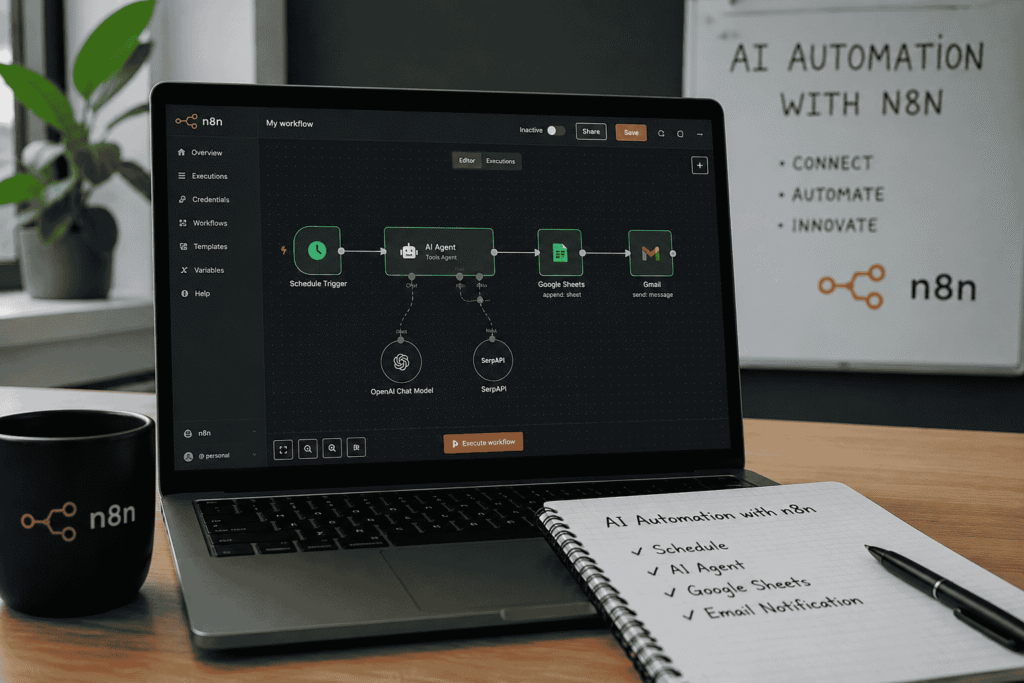
Marketing automation powered by AI is not just a productivity tool. It is a revenue engine. According to research from HubSpot, companies that use marketing automation see a 30% higher revenue compared to those that do not. Businesses using artificial intelligence tools for marketing report up to a 40% reduction in operational costs and a dramatic improvement in campaign performance.
Business automation spans every department — sales, customer service, social media, content marketing, and analytics. Workflow automation eliminates bottlenecks, reduces human error, and frees your team to focus on creative, high-value tasks that machines cannot replicate.
At Exuvez, we believe that every digital marketer — regardless of budget or team size — deserves access to AI-powered marketing strategies that actually work. That is why we have broken down the seven most impactful ways to implement AI automation in your business today.
7 Powerful AI Automation Strategies for Digital Marketers
1. AI Automation for Content Creation and SEO
Content is still king, but creating it consistently at a high quality is a massive drain on time. This is where AI automation transforms the game. AI-powered writing tools like Jasper, Copy.ai, and Claude can generate blog outlines, draft articles, write ad copy, and even optimize content for SEO in a fraction of the time a human writer would need.
But content automation goes beyond just writing. Artificial intelligence tools can now:
- Identify trending topics in your niche using real-time data
- Analyze top-ranking articles and suggest structural improvements
- Automatically interlink content across your website for better crawlability
- Generate SEO-optimized meta titles, descriptions, and image alt text
- Repurpose blog posts into social media captions, email newsletters, and video scripts
For a digital marketing agency, this means you can manage content for multiple clients simultaneously without sacrificing quality. Workflow automation pipelines can take a single approved brief and spin it into a full week’s worth of publishable content across every channel.
At Exuvez, our clients regularly use AI-assisted content workflows that reduce production time by up to 70% while maintaining brand voice and SEO integrity. The key is building a proper review layer into the automation — AI generates, humans approve, and tools publish.
2. AI-Powered Email Marketing Automation
Email marketing remains the highest ROI digital marketing channel, delivering an average of $42 for every $1 spent. When combined with AI automation, email becomes even more powerful because the system adapts to individual subscriber behavior in real time.
Traditional email marketing sends the same sequence to everyone. Marketing automation powered by AI segments your list dynamically, adjusts sending frequency based on engagement, and personalizes every element — from the subject line to the call-to-action — based on what each subscriber is most likely to respond to.
Here is what intelligent email marketing automation can do for your business:
- Behavioral triggers: Send emails automatically when a user visits a specific page, abandons a cart, or clicks a particular link
- Predictive send time: AI identifies the exact time each subscriber is most likely to open an email
- Dynamic content blocks: Show different images, offers, or products to different segments within the same email campaign
- Churn prediction: Flag subscribers who are losing interest before they unsubscribe, and automatically send re-engagement sequences
- A/B testing at scale: Test hundreds of subject line variations simultaneously and automatically shift traffic to the winner
Platforms like ActiveCampaign, Klaviyo, and Mailchimp now have AI-powered marketing features built in. When configured correctly, these systems run complex, multi-touch nurture sequences that feel personal to every recipient — but require almost no manual input from your team.
3. Social Media Scheduling and AI-Powered Marketing
Managing social media for multiple clients or platforms is one of the most time-consuming aspects of digital marketing. AI automation makes it possible to plan, create, schedule, and analyze social media content at scale — without a dedicated team of social media managers.
AI-powered marketing tools for social media can:
- Analyze which post types and formats generate the most engagement on each platform
- Automatically schedule posts at peak engagement times for different audiences
- Generate caption variations and hashtag suggestions based on your content topic
- Monitor brand mentions, competitor activity, and trending conversations in real time
- Create performance reports automatically and surface actionable insights
Business automation tools like Buffer, Hootsuite, and Sprout Social have incorporated AI layers that go far beyond simple scheduling. They now recommend content types, predict engagement scores before publishing, and even suggest when to pause campaigns based on external factors like news events or algorithm updates.
For Exuvez clients running multi-platform campaigns, we recommend building a social media automation stack that connects content creation, approval workflows, scheduling, and reporting into a single seamless pipeline. This eliminates the daily chaos of managing social channels manually and gives you back hours every week.
4. Lead Generation and AI Automation
Finding, qualifying, and nurturing leads is the lifeblood of any digital marketing business. AI automation is fundamentally changing how this process works — making it faster, more accurate, and dramatically more cost-effective.
Intelligent lead generation systems powered by artificial intelligence tools can:
- Scrape and qualify leads from LinkedIn, websites, and directories automatically
- Score leads in real time based on behavioral data, firmographics, and engagement signals
- Trigger personalized outreach sequences the moment a qualified lead is identified
- Use conversational AI chatbots to engage website visitors 24/7 and capture contact information
- Predict which leads are most likely to convert based on historical patterns
Marketing automation platforms like HubSpot, Salesforce, and Zoho CRM now feature built-in AI scoring models that rank every lead in your pipeline. Instead of wasting sales time on cold or unqualified prospects, your team focuses only on the leads the system identifies as high-probability conversions.
Workflow automation also plays a critical role here. When a lead fills out a form on your website, an automated workflow can instantly assign them to the right sales rep, send a personalized welcome email, add them to the appropriate nurture sequence, and notify your team on Slack — all within seconds and without any manual action.
This level of speed and precision is simply not possible with manual processes. AI automation gives smaller agencies and freelancers the ability to compete with larger operations by running sophisticated lead systems that previously required entire sales departments.
5. AI Automation for Paid Advertising
Running Google Ads or Meta Ads manually is becoming increasingly inefficient. The sheer volume of data, bidding variables, audience segments, and creative combinations involved makes it nearly impossible for a human team to optimize campaigns in real time. AI automation solves this at the machine level.
Google’s Performance Max campaigns are a prime example of AI automation applied to paid advertising. The system automatically tests creative combinations, allocates budget across channels, adjusts bids based on conversion probability, and identifies new audience segments — all without manual intervention.
Key areas where AI automation supercharges paid advertising include:
- Smart bidding: AI adjusts bids in real time for every single auction based on device, location, time of day, audience intent, and dozens of other signals
- Creative testing: Automated testing of hundreds of ad variations to identify the highest-performing combination
- Audience expansion: AI identifies lookalike audiences that behave similarly to your best customers and targets them automatically
- Budget pacing: Intelligent budget allocation ensures your spend is distributed optimally across campaigns, platforms, and days
- Anomaly detection: AI flags sudden drops in performance, unusual click patterns, or budget overruns before they become costly problems
For digital marketers managing paid media for clients, AI-powered marketing tools reduce the hours spent on manual optimization while improving results. The key is understanding how to set the right goals and constraints so the AI operates within your strategic framework.
6. Customer Service Automation with AI
Customer expectations have never been higher. People expect instant, accurate, and personalized responses — 24 hours a day, seven days a week. Building and maintaining a large customer service team is expensive and difficult to scale. AI automation provides the solution.
AI-powered chatbots and virtual assistants can handle the majority of routine customer service interactions without human involvement. Modern systems go far beyond simple FAQ bots. Today’s conversational AI tools understand context, remember previous interactions, integrate with your CRM and order management systems, and escalate complex issues to human agents when necessary.
Business automation for customer service includes:
- Instant query resolution: Answer common questions about pricing, availability, policies, and order status automatically
- Lead qualification via chat: Engage website visitors, understand their needs, and route them to the right sales rep or product page
- Appointment booking: Allow customers to schedule calls, demos, or consultations directly through the chatbot
- Multilingual support: Serve customers in their preferred language without hiring multilingual staff
- Post-purchase support: Handle returns, refunds, and feedback collection automatically
Platforms like Intercom, Drift, and Tidio integrate seamlessly with WordPress websites and CRM systems. When connected to your marketing automation stack, they create a unified customer experience from the first website visit to post-purchase support.
At Exuvez, we integrate intelligent customer service automation into our clients’ websites as part of our broader digital marketing strategy. The result is a 24/7 revenue-generating and relationship-building system that requires minimal ongoing management.
7. Analytics, Reporting, and AI Automation for Decision-Making
Data is the foundation of every successful digital marketing strategy. But raw data is only valuable when it is analyzed, interpreted, and acted upon quickly. This is where AI automation delivers one of its most transformative benefits — turning complex data into clear, actionable intelligence.
Traditional analytics requires a skilled analyst to manually pull reports, identify patterns, and make recommendations. AI-powered analytics tools do this automatically and continuously, surfacing insights the moment they become relevant.
Workflow automation for analytics and reporting includes:
- Automated dashboards: Real-time performance dashboards that update automatically across all your marketing channels
- Predictive analytics: AI identifies trends and forecasts future performance based on historical patterns, helping you make proactive decisions
- Anomaly detection: Automatic alerts when something unusual happens — a traffic spike, a conversion drop, or an unusual bounce rate on a key landing page
- Attribution modeling: AI assigns credit accurately across multi-touch customer journeys so you know exactly which channels and campaigns are driving revenue
- Competitor intelligence: Automated monitoring of competitor ad spend, content strategy, and search rankings
Tools like Google Looker Studio, Supermetrics, and Databox make it possible to build fully automated reporting systems that send weekly summaries directly to your inbox — or your clients’ inboxes — without you lifting a finger.
When AI automation handles your reporting, you spend less time compiling data and more time making strategic decisions that grow your business.
How to Get Started with AI Automation at Exuvez
Implementing AI automation does not have to be overwhelming. The best approach is to start with the area of your business that is consuming the most time and causing the most frustration, then build from there.
Here is a simple three-step framework for getting started:
Step 1: Audit your current workflow. Identify every repetitive task your team performs daily or weekly. These are your highest-priority automation candidates. Common examples include social media posting, email follow-ups, lead data entry, report generation, and ad monitoring.
Step 2: Choose the right tools. Match each task category to the appropriate AI-powered marketing tool. You do not need to automate everything at once. Start with one or two high-impact automations, master them, and then expand.
Step 3: Build, test, and optimize. Set up your automations, run them in parallel with your manual processes for the first few weeks, and compare results. Use the performance data to fine-tune your settings and expand your automation stack.
At Exuvez, we offer digital marketing services designed to help businesses at every stage of this journey. Whether you need help designing your first automation workflow or want a fully managed AI-powered marketing system, our team is ready to help.
Explore our full range of digital marketing solutions and discover how Exuvez can help you build a smarter, faster, and more profitable business in 2026.
Frequently Asked Questions About AI Automation
Q: What is AI automation and how is it different from traditional automation? A: AI automation uses machine learning and artificial intelligence to perform tasks that adapt and improve over time based on data. Unlike traditional rule-based automation, AI automation can make intelligent decisions, recognize patterns, and optimize itself without constant human input.
Q: How does AI automation help with marketing automation specifically? A: Marketing automation powered by AI goes beyond simple email sequences. It personalizes content, predicts customer behavior, dynamically segments audiences, and optimizes campaigns in real time. The result is higher engagement, better conversion rates, and lower cost per acquisition across every channel.
Q: Why is AI automation important for small businesses and digital marketers? A: AI automation levels the playing field. Small businesses and solo digital marketers can now run sophisticated, enterprise-level campaigns with a fraction of the resources. Workflow automation eliminates repetitive tasks, allowing small teams to focus on strategy and client relationships instead of time-consuming manual work.
Q: How much does it cost to implement AI automation for my business? A: The cost varies widely depending on the tools and complexity of your automation stack. Many excellent artificial intelligence tools offer free tiers or affordable starter plans. Tools like Zapier, Mailchimp, and Canva’s AI features start at under $50/month. Full enterprise automation solutions can run into thousands per month, but the ROI typically far exceeds the investment within the first few quarters.
Q: How do I get started with AI automation through Exuvez? A: Getting started with AI automation through Exuvez is simple. Visit our website, explore our digital marketing services, and reach out for a free consultation. Our team will assess your current workflow, identify the highest-impact automation opportunities, and build a customized strategy aligned with your business goals in 2026.